Request Information
We're Sorry
There was an unexpected error with the form (your web browser was unable to retrieve some required data from our servers). This kind of error may occur if you have temporarily lost your internet connection. If you're able to verify that your internet connection is stable and the error persists, the Franklin University Help Desk is available to assist you at helpdesk@franklin.edu, 614.947.6682 (local), or 1.866.435.7006 (toll free).
Just a moment while we process your submission.

Which MBA Program is Right for Me? 4 Things You Should Consider
Choices are good. Decisions? Not so much. In fact, decisions can be downright difficult.
When it comes to knowing which MBA program is right for you, there’s a lot to think about. What can an MBA do for you? What would make an MBA program worth it? What do you want from your MBA program?
Decisions, decisions, decisions.
It’s a big decision to go after your MBA. But just as big is deciding on your answer to this question: Which MBA program is right for me?
MBA Programs: Dos and Don’ts for Picking the Right One
Just because an MBA can help you advance your career, launch a business, or achieve a personal and professional goal doesn’t mean that every MBA program is right for you.
No worries. If you're not sure which MBA program is right for you, here are 4 things you should know as you think through your options.

1. Accreditation
DO Choose an Accredited MBA Program
Investing 12 months or more in an online MBA program is a big deal. So you’ll want to make the best decision about where to get your MBA–and that means choosing a business school with an accredited MBA program.
What is accreditation and why does an accredited MBA matter?
MBA accreditation helps ensure the quality of the program. Colleges and universities voluntarily put their MBA programs through accreditation to demonstrate to their students that the degree they earn is worth their investment of time and money.
There are two main types of accreditation: institutional accreditation and programmatic accreditation; and both are exactly what they sound like. For institutional accreditation, entire institutions are reviewed by accrediting organizations. For programmatic accreditation, a specialized institution reviews only the program or a single-purpose institution.
As an example, Franklin University is institutionally accredited by the Higher Learning Commission. Franklin’s MBA program receives specialized accreditation by the International Assembly for Collegiate Business Education (IACBE), the leader in outcomes-based accreditation in business.
Other well-respected accrediting bodies include the Association to Advance Collegiate Schools of Business (AACSB) and the Accreditation Council for Business Schools and Programs (ACBSP).
Keep in mind that not every MBA program is accredited.
To find out if your MBA program is accredited, check the accreditation body’s database, visit the college or university’s website or talk with an admissions advisor.
What matters most when choosing a master’s program? Compare features, benefits and cost to find the right school for you.
2. Academic Rigor & Practicality
DON’T Assume All Programs Are Created Equal
Here’s a fact about MBAs that may or may not surprise you: No two MBA programs are alike. There are big and little differences that distinguish one MBA program from another. So, take the time to really look into the program before deciding which MBA program is right for you.
Here are three things to look for in your MBA program:
- Concentration or Specialization: MBAs can be broad based or targeted toward a specific functional area. If you’re looking to extend beyond your current area of expertise and develop your skill set, consider a general MBA program. Otherwise, look for a customized online MBA that lets you specialize in your chosen area, such as business psychology, finance or organizational leadership.
- Curriculum: A well-rounded curriculum should help you learn to lead in today’s business world. It should include courses across all the major disciplines, such as finance, human resources, marketing, accounting and operations.
- Program Outcomes: When you graduate with your MBA, you want to be sure you have the skills and abilities to do what employers are looking for. MBA program outcomes may include the ability to initiate tactical, operational, and strategic decision making, applying theoretical and practical perspectives from multiple disciplines, and engaging and responding to social, environmental, and economic challenges. Some MBA programs offer an integrated program to help reduce redundancies across disciplines so it can be helpful to see if your program does.
3. Flexibility
DO Consider an MBA Program that Fits Your Life
Earning an MBA is a big deal and a big commitment. It’s also one that’s likely to help you move up in the ranks higher and faster, increase your earnings potential throughout your career, and give you access to a robust and lifelong peer network.
Even better? The right MBA program can help a busy, working adult like you earn the MBA that helps you achieve your career goals and still have a life.
As you think about which MBA program is right for you, look for an MBA that lets you balance your education with your other commitments. You may want to enroll in an MBA program that offers flexible, online classes; has courses that align with your professional goals and interests; and lets you decide how much (or how little) time you devote to your classes.
4. Value
DON’T Forget to Ask Yourself, “Is an MBA Worth it?”
If you want to fast-track your career, an MBA can be an all-important three-letter credential. So, it’s important to look at all aspects of an MBA–including by the numbers.
Here are some important facts and figures about top executives, including CEOs, COOs and CFOs, many of whom have an MBA.

Employment Outlook
- The U.S. Bureau of Labor Statistics (BLS) predicts a 6% growth rate for top executives through 2031.
- The BLS also anticipates about 318,000 annual job openings for top executives through 2031.
- According to a 2022 report from the Graduate Management Admission Council (GMAC), 92% of corporate recruiters and 95% of staffing firms say they expect to hire newly minted MBAs.
Salaries for Top Executives
- Lightcast found that the median advertised salary for MBAs in 2022-23 was $126,300 and that the three-year advertised wage trend rose by 42% between September 2020 and August 2023.
- In the Bureau of Labor Statistics 2021 report, the median annual wage for chief executives was $179,520.
- The BLS also reported that top earners took in more than $208,000 annually that same year.
What Jobs Can You Get With an MBA?
Career paths for MBAs are as wide and varied as the individuals who earn them. Here are just a few of the manager, director and consultant job titles with six-figure salaries you can expect when you earn an MBA:
- CEO
- CFO
- Corporate Controller
- Direction of Human Resources
- Director of Demand Generation
- Director of Product Strategy
- Director of Revenue
- Financial Analyst
- General Manager
- Global Marketing Director
- Market Development Manager
- Organizational Effectiveness Consultant
- Pharmaceutical Sales Manager
- Privacy Officer
- Project Logistics Manager
- Registered Nurses Unit Manager
- Vice President of Strategy
Which MBA Program Is Best?
When it comes down to it, only you can decide which MBA program is best. That’s why it makes sense to do your due diligence. Hopefully, these tips will help you take a closer and better look at your options for earning an MBA.
Finally, remember that the MBA program that’s right for you is the one that lets you achieve your personal and professional goals, as well as grow your leadership capabilities.
Free Master's Toolkit
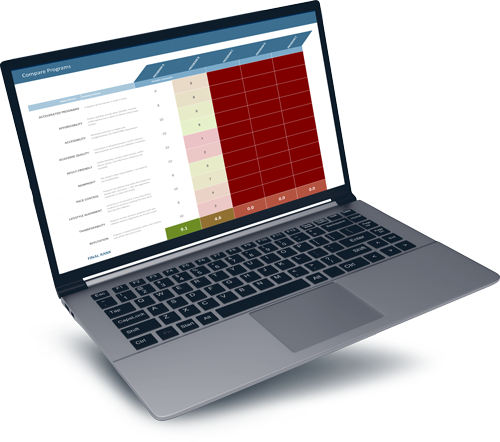
Estimate The Cost of Your Degree & More
Eliminate guesswork by comparing schools and calculate the ROI of a master’s degree.


