Request Information
We're Sorry
There was an unexpected error with the form (your web browser was unable to retrieve some required data from our servers). This kind of error may occur if you have temporarily lost your internet connection. If you're able to verify that your internet connection is stable and the error persists, the Franklin University Help Desk is available to assist you at helpdesk@franklin.edu, 614.947.6682 (local), or 1.866.435.7006 (toll free).
Just a moment while we process your submission.

Is a Master’s in Psychology Worth It?
A master’s in psychology opens the door to a wide range of careers, from mental health counseling to corporate consulting. For many, it’s an important step toward becoming a licensed practitioner, while for others, it serves as a gateway into industries that rely heavily on human insight, research and communication.
Whether the goal is to help others, understand human behavior or pivot into a people-focused role, psychology provides a meaningful and flexible path.
However, as with any graduate program, the decision involves questions about time commitment, career payoff, and whether or not a master's degree program is truly worth it in the long run. These questions require thoughtful consideration and are explored in more depth below.
What Is a Master’s Degree in Psychology?
A master’s degree in psychology is a graduate-level program that delves deeper into the theoretical, scientific and practical aspects of psychological study.
According to Dr. Kelly Renner, program chair of psychology and social sciences at Franklin University, “The M.S. in psychology provides an in-depth examination of the discipline of psychology. The student will study psychological concepts, theories and research methods and explore applications of contemporary psychology within a variety of professional settings.”
Most programs take two to three years to complete and can be offered in various formats, including online and part-time, to accommodate working professionals.
Students also typically choose focus areas when pursuing their degree, such as clinical psychology, counseling, industrial-organizational psychology or applied behavioral analysis. Focused study allows for specialized training that aligns with specific career paths, whether clinical or non-clinical, and can also help pave the way for future doctoral studies.
.png)
What Are the Benefits of Earning a Master’s Degree in Psychology?
A master's psychology program can offer both immediate and long-term benefits.
For many, it's a strategic investment in a more stable and rewarding career, with one of the key advantages being career versatility. Graduates holding this degree are not limited to clinical work; they can also find roles in education, business, human resources, government and nonprofit sectors.
Dr. Renner notes that another significant benefit is the potential for higher earnings. While salaries can vary widely by industry, experience, location and job title, master's credentials typically open doors to more senior and specialized roles, especially compared to candidates only holding a bachelor's degree.
The emotional rewards of this degree are also significant. For those drawn to supportive professions, the opportunity to directly impact lives through counseling, education or organizational change can be deeply satisfying.
Lastly, graduate degree programs can also provide a strong foundation for further education, including doctoral study, and allow students to gain in-demand soft and hard skills such as data analysis, communication, empathy and conflict resolution.
.png)
What Can You Do With a Master’s in Psychology?
The scope of jobs available to those with a master’s in psychology is broader than many expect. While clinical and counseling roles remain popular, today’s graduates can also be found in corporate boardrooms, public health organizations, research institutions and more.
“In the past, psychology degrees were more narrowly associated with roles like clinical psychology or teaching,” explains Dr. Renner. “Nowadays, graduates can apply their degree in various fields. Many employers value the understanding of human behavior that comes with a psychology background, especially in areas that require communication, conflict resolution or research skills.”
Become a Clinical Psychologist (With Further Credentials)
For those interested in therapeutic or diagnostic work, a master’s in psychology is often the first step. With the right qualifications, psychologists can work in settings such as hospitals, private practices, mental health clinics and correctional facilities.
However, becoming a licensed clinical psychologist typically requires additional credentials, including a doctoral degree and supervised clinical hours. Licensure requirements vary by state, so knowing what's needed before getting started is important.
The field shows strong growth. According to 2024 data from Lightcast, clinical psychologists with appropriate licensure in the U.S. can accrue median advertised earnings of approximately $97,800, and job growth is projected at 20.9% through 2034.
What matters most when choosing a master’s program? Compare features, benefits and cost to find the right school for you.
Enter the World of Human Resources
Psychology graduates with an advanced degree often transition into human resources, using their understanding of behavior and motivation to improve hiring processes, workplace culture and employee development. These roles may involve managing conflict, conducting training or advising leadership on organizational change.
Advertised salary data collected from Lightcast in 2024 shows that HR managers in the U.S. with a master's degree in psychology earn an average of $135,800 annually, depending on experience and region. Job growth of 9.5% is expected in HR and similar talent management roles through 2034.
Work as a Career Counselor or Academic Advisor
Another pathway is career or academic counseling. With a solid foundation in psychological principles, professionals in these roles help individuals make informed decisions about education and employment, develop personal and professional skills and navigate career transitions.
According to the 2024 Lightcast data, guidance counselors and academic advisors in the U.S. have median advertised earnings of $61,700, and job openings are projected to grow by 9.5% through 2034.
Become an Industrial-Organizational Psychologist
Industrial-organizational (I/O) psychologists study workplace behavior to improve productivity, leadership and job satisfaction. This high-demand field often leads to consulting or corporate positions in large organizations and government agencies.
U.S. data from Lightcast (2024) anticipates job growth in this area of 15.9% through 2034, with I/O psychologists having median advertised earnings of $142,600, depending on their role and experience.
Is Grad School for a Master’s in Psychology Worth It?
Pursuing a Master’s in Psychology requires careful consideration of personal goals, financial investment and long-term plans.
Dr. Renner advises prospective students to be intentional about their program selection:
“Take the time to find a program that is the right fit for you. If you know the area of psychology you want to study, then find a program that has faculty who are experts in that area and has courses that focus on that area. If you are unsure which area of psychology you want to study, then look for programs that are more broad but provide the opportunity to explore different areas of psychology.”
Career Goals
A master’s degree is a non-negotiable requirement for some roles. This is especially true for careers that involve licensure or specialized work in clinical settings, such as a research psychologist.
For other psychology jobs, such as research assistant, HR manager or nonprofit liaison, a master’s may be a value-add rather than a necessity.
Understanding which category a desired career falls into is important in evaluating whether a graduate education is the right path for a potential master's student.
Job Opportunities and Demand
The mental health field has seen significant growth in recent years. As Dr. Renner puts it, “Over the past decade or so, there has been a significant shift in how society views mental health issues. With more people seeking therapy, counseling and psychological support, the demand for professionals in this field has grown.”
This demand is mirrored in non-clinical settings, where companies increasingly seek employees with insight into human behavior, emotional intelligence and conflict resolution. These are the types of skills typically honed in master's psychology programs.
Flexibility Across Fields
Psychology graduate students can possess skills that are highly transferable across industries.
From research and data analysis to communication and empathy, the skill toolkit developed through a master’s program prepares students for roles in education, business, tech, healthcare and beyond. This flexibility and diversified skillset ensures that even those who change career paths can leverage their degree in meaningful ways.
Tuition and Financial Aid
Like any advanced degree, a master’s in psychology comes with financial considerations. However, there are ways to manage the cost.
Students may access financial aid through the Free Application for Federal Student Aid (FAFSA), where applicable. Institutional aid may also be an option, with scholarships, grants and assistantships available at many universities. For working professionals, employer reimbursement programs may also be a route to consider.
Weighing tuition against future earning potential is an important part of the decision-making process. Many graduates find that the investment pays off in the form of career advancement, job satisfaction and potential salary bumps. Still, it's important for them to thoroughly research the industry they want to move into before committing to any major education decisions.
.png)
Ready To Explore Your Future in Psychology?
A master’s degree in psychology can lead to a fulfilling and versatile career that offers both personal and professional rewards.
Franklin University’s online Master’s in Psychology program is designed for professionals who want a flexible, practical education rooted in real-world application. With a focus on evidence-based practice and career-ready skills, it’s built to support students in making meaningful contributions, no matter their path.
Request more information about this program today, or apply now if you're ready to get started.
Free Master's Toolkit
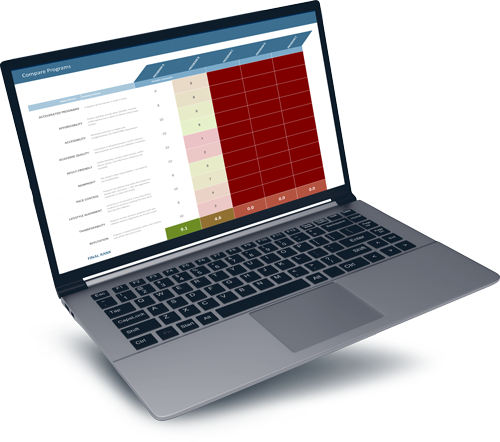
Estimate The Cost of Your Degree & More
Eliminate guesswork by comparing schools and calculate the ROI of a master’s degree.