Request Information
We're Sorry
There was an unexpected error with the form (your web browser was unable to retrieve some required data from our servers). This kind of error may occur if you have temporarily lost your internet connection. If you're able to verify that your internet connection is stable and the error persists, the Franklin University Help Desk is available to assist you at helpdesk@franklin.edu, 614.947.6682 (local), or 1.866.435.7006 (toll free).
Just a moment while we process your submission.

How Much Does an Associate Degree Cost?
An associate degree can offer a faster, more affordable path to a rewarding career, but understanding the full financial picture is key. For many students, it's not just about tuition. It's about the total cost of attendance, the return on investment and how the degree fits into long-term goals.
From tuition differences to the cost of books and supplies, the expenses can add up quickly. Still, with careful planning and an awareness of how those costs compare to other degrees, many students find the associate degree is a practical and valuable option.
For those looking to step into the workforce sooner or ease into higher education, earning an associate degree often makes financial sense.
What Is an Associate Degree and How Does It Compare to a Bachelor's Degree?
An associate degree typically requires about two years of study, or approximately 60 credit hours. These programs often focus on foundational knowledge and industry-specific skills designed to prepare students for the workforce or future academic study.
In contrast, a bachelor’s degree usually takes four years to complete and involves a broader curriculum that includes general education and major-specific courses. Bachelor’s degree holders often pursue more advanced roles or leadership positions, and the extended academic experience can be attractive to employers in competitive fields.
However, it also requires a longer time commitment, as well as more tuition and fees.
Both degree types help pave the way toward more career opportunities, but the associate degree provides a quicker and more affordable route for many. Especially those looking to enter skilled trades, healthcare support roles or technical fields.
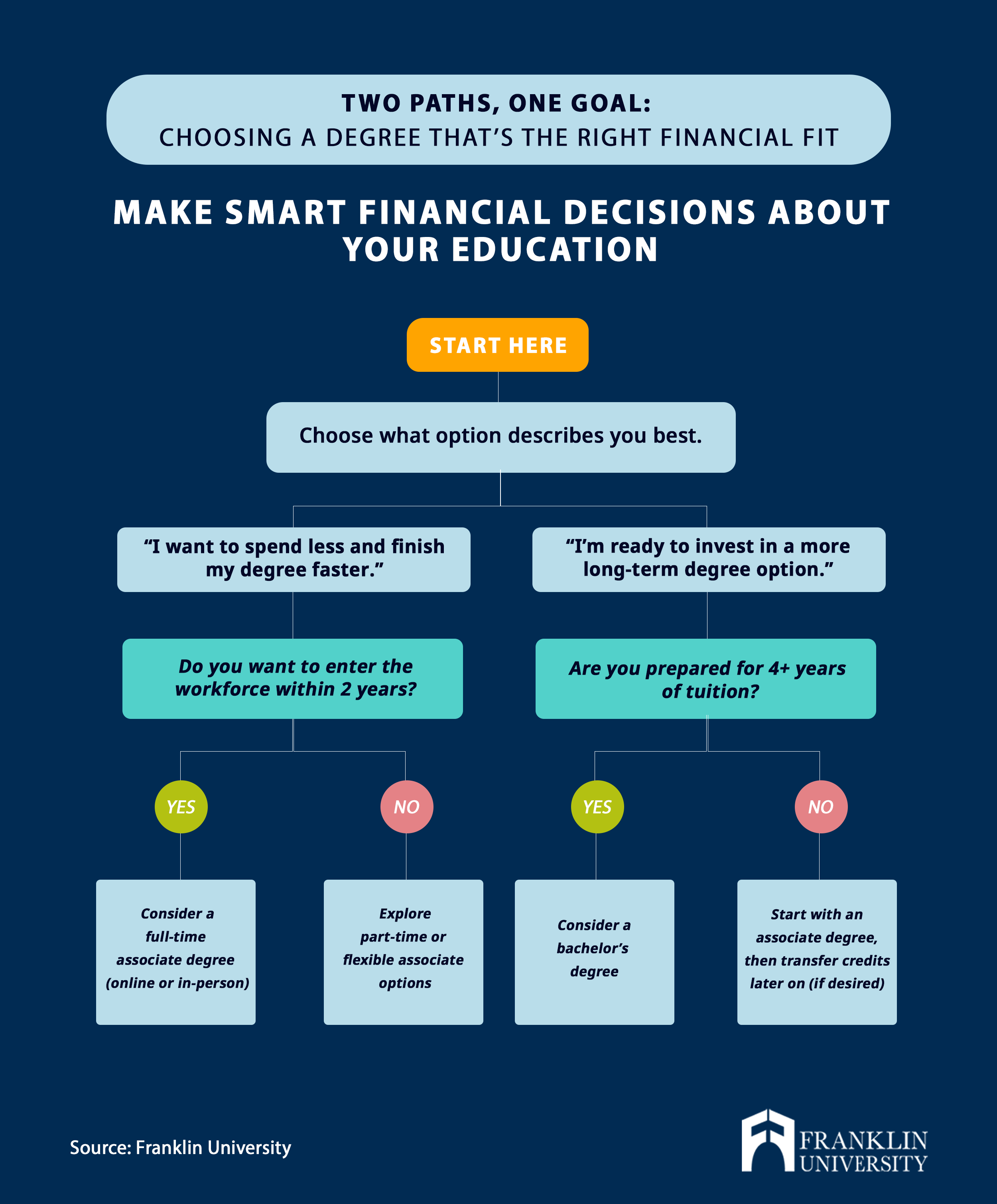
Key Factors That Affect the Cost of an Associate Degree Program
The cost of an associate degree varies widely depending on several key factors.
Public colleges tend to offer lower tuition rates than private institutions. In-state students often benefit from reduced tuition compared to out-of-state students, though this distinction may not apply in online programs.
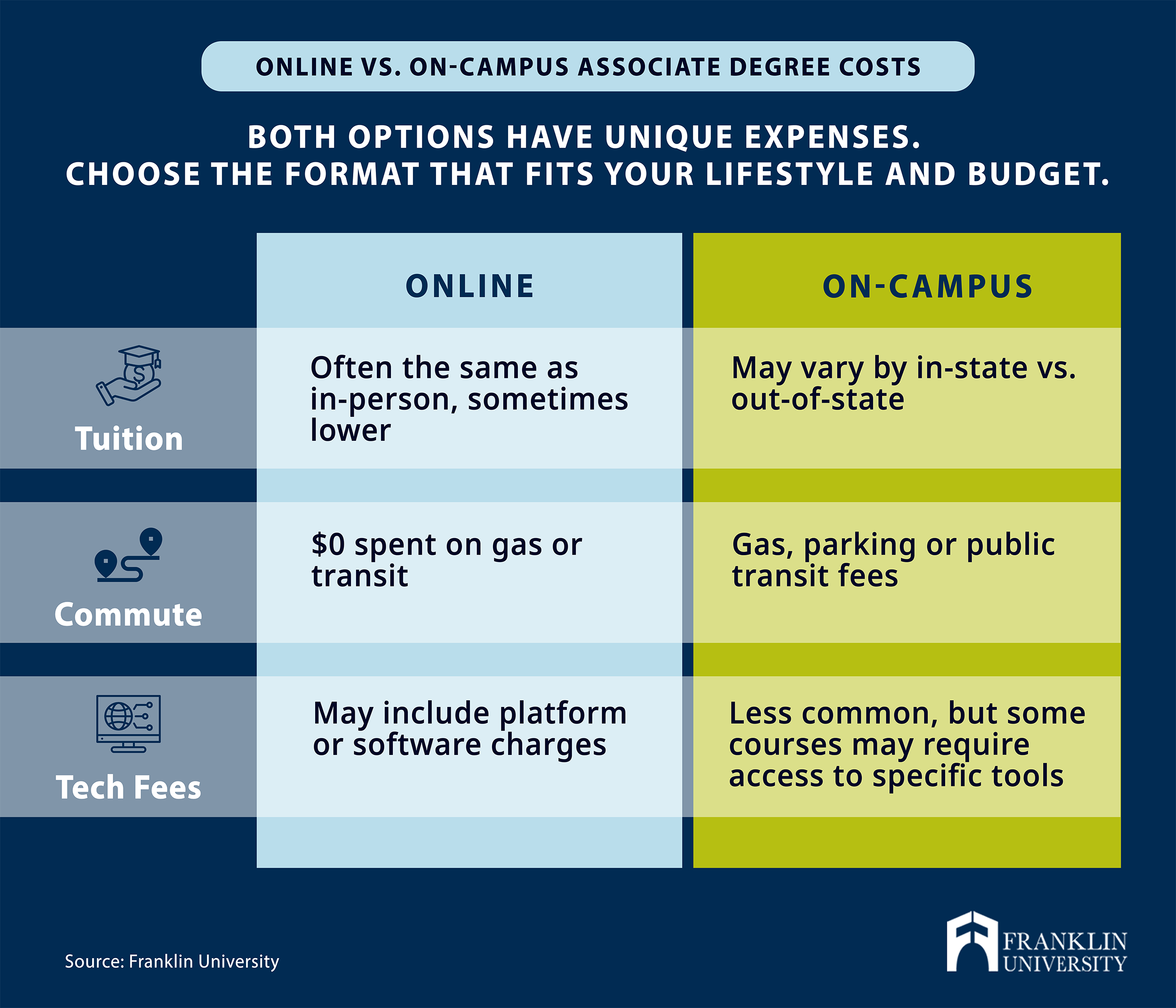
Program delivery also plays a role. Online students often save on commuting, housing and parking costs. But there are nuances to consider.
Michael Giavasis, assistant director of undergraduate admissions at Franklin University, explains:
“Just as each student has different needs and learning styles, each school offers a unique education. Students should consider whether they prefer a school near home or far away, face-to-face versus online courses, more professor involvement or less contact with faculty and more.”
Aside from tuition, additional fees can influence the total cost. Textbooks, lab supplies, course materials and equipment can carry significant price tags. Technology charges and administrative fees may be required for online learners. Even in-person students often encounter surprise expenses.
“To have a clear financial picture,” says Giavasis, “students should ask their admissions advisor for a thorough list of potential fees they can expect to incur. Schools are often upfront with tuition and book charges, but other fees may be less obvious. Expenses like parking passes, technology charges, equipment rentals, lab fees and registration costs may not appear until a student enrolls and sees their first semester balance.”
Financial aid, including scholarships, grants and federal student loans, can also help offset some of these costs.
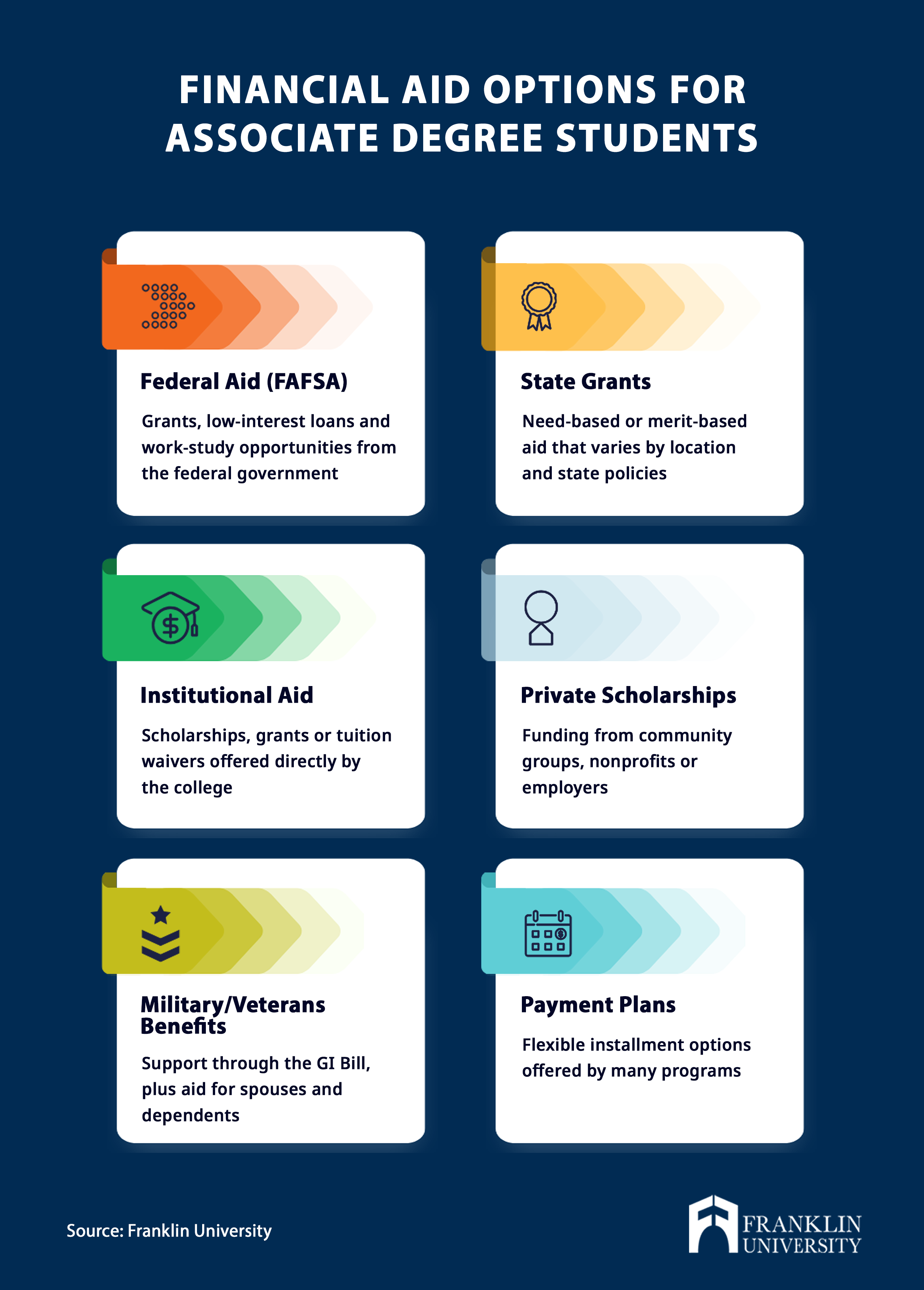
Comparing Costs: Associate Degree vs. Bachelor's Degree Program
The cost difference between an associate and bachelor’s degree should be taken into account.
According to averages taken from 2024 Lightcast data, a two-year associate degree can cost between $15,000 and $40,000, depending on the institution and the program. In comparison, the cost of a four-year bachelor’s degree can range from $30,000 to over $100,000.
Some students choose to complete an associate degree at a community college first, then transfer into a bachelor’s program. This strategy can reduce the overall cost of a four-year degree. Since average annual tuition is usually charged per credit hour, associate degree programs (particularly at community colleges) tend to offer lower rates than four-year universities.
Giavasis notes that many students, especially recent high school graduates, overlook everyday expenses that impact the total cost:
“When budgeting for an associate degree, many students forget to budget for expenses not charged directly by their school. For instance, a student may need a new laptop or pricey software to complete assignments. For on-campus classes, a student might forget to budget money for additional childcare or travel expenses like gas or food on the go. A student should consider how going back to school will affect their day-to-day so that those additional expenses are accounted for along with school fees.”
Choosing an Online Associate Degree
Online degree programs continue to grow in popularity, particularly among working adults and parents. Flexibility is one of the biggest advantages.
Classes can often be completed asynchronously, allowing students to fit education around work, family or caregiving responsibilities.
Another benefit is cost savings. Online associate degree costs may include technology or platform fees, but they typically eliminate commuting costs. Some institutions also charge the same tuition for in-state and out-of-state online learners, making location less of a factor in overall expense.
What Are the Career Opportunities After Earning an Associate Degree?
Associate degree holders can access a variety of career paths in high-demand fields. Many programs are designed to prepare students for immediate employment rather than requiring additional years of study.
Graduates can pursue roles in areas like healthcare, technology, legal support, business and the skilled trades.
For example, dental hygienists have median annual earnings of $57,900, according to 2024 Lightcast data. Paralegals earn around $65,700 annually, and IT support specialists see median annual earnings of $61,500.
The variety of options allows students to align their education with clear career goals. Giavasis emphasizes the importance of doing that research early:
“As far as the field of study, students should ensure that their program will help fulfill the career and personal goals they’ve set out to achieve. If a student has a particular career goal in mind, it is worth the time and research to make sure their chosen program will qualify them for that position or discover if further education (like a bachelor’s or even master’s) will eventually be required.”
Some associate degree graduates later return to school for additional credentials, building on their degree to access higher earning potential or leadership roles.
Weighing the Value: Is an Associate Degree Worth the Cost?
The value of an associate degree depends on several variables, but for many students, the shorter time to completion and lower upfront cost make it an appealing choice. Completing an associate degree in two years, or even less with accelerated programs, means entering the workforce sooner and beginning to earn a salary.
This can be very attractive for ambitious adults, from career changers to recent high school grads.
Compared to bachelor's degree students, associate degree holders typically take on less student loan debt. In cases where a career path does not require a four-year degree, this can potentially increase return on investment (ROI).
However, it's important to note that ROI ultimately depends on the field of study, the strength of the job market and a student’s individual career goals. But for those seeking cost-effective and targeted education, the associate degree offers a solid foundation.
Earn Your Associate Degree Online at Franklin University
Franklin University offers affordable and flexible associate programs that prepare students for real-world careers.
Whether the goal is to launch into the workforce or eventually pursue further education, Franklin’s online classes and career-aligned curriculum help students meet their goals while keeping costs in check.
Explore the opportunities available through Franklin’s associate degree programs and take the next step toward a rewarding future. Request more information today, or begin your application to get started.